
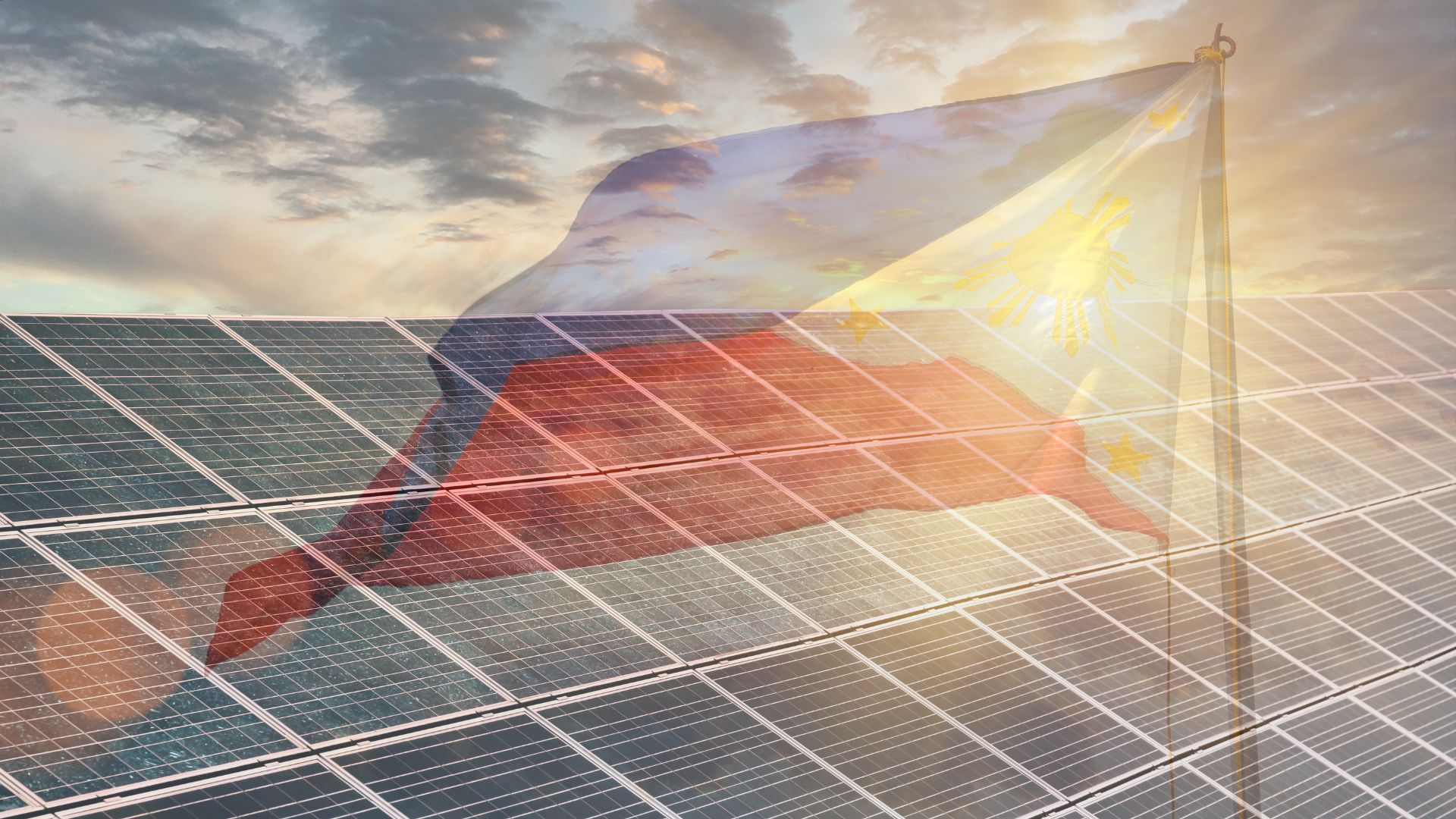
The first time I sat with a homeowner in Mindanao to review a rooftop solar proposal, she told me, almost apologetically, that she didn’t want to be “too forward” about saving money. A year later she called to say their family’s monthly electricity bill had dropped so much they were finally able to put aside savings for the kids’ schooling. That small, human story captures why I believe the near‑future of solar energy in the Philippines is not only technologically possible — it’s personally transformative. Over the next few years, solar will stop being an optional upgrade and become the default path for energy resilience, sensible finance, and everyday climate action for Filipino households, communities, and businesses.
Why the Philippines is Poised for Rapid Solar Growth
The Philippines has a simple advantage: sunlight. Our islands receive abundant solar radiation almost year‑round, which gives rooftop systems, community microgrids, and utility‑scale plants a natural head start. But sunlight alone doesn’t create markets — what’s happening now is an alignment of policy, falling technology costs, better financing, and proven use cases that together make solar a realistic mainstream choice.
Policy is shifting. Government targets, renewable energy laws, and net‑metering frameworks already exist and are maturing. Private companies and local governments are starting to design projects that blend rooftop solar, battery storage, and demand‑side management. International reports and investor interest have also signaled that investing in solar plus storage in the Philippines is financially competitive with new fossil fuel plants. That changes the conversation from “Can the Philippines do solar?” to “How fast can we scale responsibly?”
From a cost perspective, the price decline of PV modules and the improvements in battery systems mean payback periods for properly sized residential systems are shrinking. For many households and small businesses, a 4–7 year payback is now realistic when combined with net‑metering credits, sensible load shifting, and energy‑efficient behavior. For utilities and large developers, solar + storage can now compete with incremental fossil capacity that would otherwise be added to meet demand growth.
Technology Trends That Will Shape the Next Five Years
Solar panels themselves will keep improving in incremental but meaningful ways: higher efficiencies, better temperature resilience, and more modular mounting options for awkward roofs. Bifacial panels and trackers will increase yields for commercial and ground‑mounted systems. But the real leap comes from the systems around the panels.
Batteries are moving from luxury to necessity. Lithium‑ion remains dominant, but we’ll see more hybrid chemistries and second‑life battery schemes to lower costs. Smart inverters that allow two‑way grid interaction, rapid islanding for safety during outages, and grid‑support functions like frequency regulation will become standard features rather than add‑ons.
Software will quietly be the backbone of reliable solar adoption. Monitoring platforms that tie production to household loads, allow automated shifting of high‑consumption tasks, and optimize battery dispatch for bill minimization will let ordinary users treat solar as an appliance that just works. Aggregation software that parcels together rooftop systems into virtual power plants (VPPs) will provide grid operators flexible capacity without constructing new thermal plants.
Microgrids and community solar will scale in rural and island areas where grid extension is costly. These projects will combine solar, storage, and intelligent demand control to increase reliability, and they will often be co‑designed with local cooperatives or municipalities to ensure local buy‑in and maintenance capacity.
Policy, Regulation, and Market Design: What Needs to Happen
For solar’s future to be inclusive and not just the domain of wealthier homeowners and large developers, regulations must be practical and supportive. Streamlined permitting, predictable interconnection standards, and efficient net‑metering settlement processes reduce friction. Where possible, policies that encourage behind‑the‑meter storage and compensation mechanisms for VPP services will align private incentives with public grid stability.
Feed‑in tariffs had a role in early deployment, but the near future will likely rely on auctions, green procurement, and blended financing. The government’s role should be to remove bottlenecks: simplify approvals, prioritize grid upgrades where curtailment is frequent, and roll out targeted subsidies or loan guarantees for low‑income households and public institutions like schools and health centers.
Crucially, tariff design must evolve. As more customers adopt solar, utilities need fair compensation frameworks that recover network costs without disincentivizing renewables. This balance can be achieved through time‑of‑use pricing, volumetric network charges that reflect peak contribution, and incentives for customers who allow controlled export during constrained periods.
Financing and Business Models That Will Democratize Access
Access to affordable capital is the bridge between an interested homeowner and an installed system. Expect to see more diverse finance models: lease‑to‑own, pay‑as‑you‑save, community crowdfunding for shared ground projects, and embedded finance from retail partners. Commercial banks are already piloting green loans with longer tenors and collateral structures suited for small solar projects. Microfinance institutions are beginning to design products for lower‑income households that combine basic energy efficiency upgrades with solar, lowering overall system size and cost.
Third‑party ownership models, where a developer installs and maintains the system while selling energy to the household, will expand. This model lowers the entry barrier and aligns incentives: the provider is motivated to ensure high system uptime and production. For businesses, on‑bill financing and corporate power purchase agreements (PPAs) will let companies lock in energy costs and meet sustainability targets without massive upfront capital expenditure.
Importantly, financing solutions will increasingly link to outcomes: lower default risk because households save on energy, improved credit profiles through consistent bill payment history, and community trust built through successful local projects. For a company like Energisto.ph, offering turnkey packages that pair hardware with financing and a transparent maintenance plan will be a strong differentiator.
Social Impacts: Jobs, Local Capacity, and Community Resilience
The clean energy transition is also a job story. Scaling solar builds demand for installers, technicians, system designers, and operations teams. Training programs and certified technician tracks will be essential so local communities can own the maintenance and troubleshooting skills required for long‑term sustainability. When projects are designed with local employment and supplier inclusion in mind, the economic benefits ripple outward: local workshops, logistics, and even small manufacturing nodes grow.
Community resilience is another important social dimension. Solar + storage microgrids can keep clinics, water pumps, and communication hubs running during storms. Schools can host solar systems that reduce utility expenses and create learning opportunities for students around energy literacy. When communities see direct, localized benefits, social acceptance and care for the systems follow.
Grid Integration Challenges and Practical Solutions
Rapid solar deployment brings tangible grid management challenges: voltage rise in distribution feeders, reverse power flow, and curtailment during low demand. Left untreated, these issues create friction between utilities and distributed solar owners. Practical solutions are emerging: smarter inverters with Volt‑VAR control, dynamic export limits managed by aggregation platforms, and targeted reinforcement of critical feeders.
Investment in digital grid monitoring makes a huge difference. A distribution network with better visibility can handle higher penetrations of distributed generation safely. On the policy side, clear technical standards for interconnection and fast, transparent dispute resolution are critical. For developers, early coordination with distribution utilities reduces surprises during commissioning and prevents unnecessary curtailment.
Environmental and Climate Co‑Benefits
Solar’s obvious climate benefit is emissions avoided. But there are quieter, local environmental gains: reduced air pollution in urban centers, decreased pressure on diesel generators in remote islands, and less land disturbance when rooftop and floating solar options are prioritized over haphazard land clearing. Well‑designed solar projects that factor in biodiversity, drainage, and storm resilience can deliver net positive outcomes.
Moreover, as the country historically imports fossil fuels, solar reduces exposure to volatile international fuel markets, improving national balance of payments and providing a hedge against inflationary pressure on electricity prices — benefits that translate into real household purchasing power.
What Households and Small Businesses Should Do Today
If you’re a homeowner or small business owner deciding whether to explore solar, start with practical steps. Audit your energy use: small behavioral changes combined with modest solar and a tiny battery can yield meaningful savings. Get multiple quotes and ask providers to show transparent yield calculations and worst‑case scenarios. Consider systems sized to offset daytime loads first, then add storage incrementally as budgets allow. Use the presence of net‑metering and local incentives in your financial modeling.
Choose partners who offer monitoring and clear maintenance packages. A system that silently underperforms because of a trivial inverter fault defeats the financial case. For small businesses, look for financing that lets you deploy with minimal disruption to cash flow.
Where I See Energisto.ph’s Role in This Near Future
I’ve watched small installers evolve into full service providers, and I believe Energisto.ph is ideally positioned to act as a trusted integrator: bringing together hardware procurement, intelligent design, financing partners, and after‑sales service. Our role should be to translate policy and technical complexity into simple, local solutions: a school in a provincial town, a bakery in Cebu, or a barangay microgrid. By prioritizing transparency, training, and sensible warranties, Energisto.ph can turn early adopters into advocates.
Risks and How to Manage Them
Nothing scales perfectly. Supply chain shocks, uneven policy implementation, and grid constraints will create bumps. The best mitigation is conservative system design, diversified procurement, and strong stakeholder engagement. Pilot projects that test business models and grid interactions before full rollout reduce financial and operational risk. Finally, embedding training and local capacity into projects ensures the systems remain viable for decades.
A Near Future That Feels Close and Human
I don’t imagine a future where every rooftop sprout looks identical. I imagine varied, human‑scale solutions: a solar canopy shading a sari‑sari store and powering a freezer; a school with panels and batteries that become classroom tools; a cooperative in an island town managing a microgrid that keeps the lights on for everyone during a storm. The future of solar energy in the Philippines is technical and economic, yes, but also profoundly social. It’s about choices families make, the small businesses that stay open longer, and the communities that bounce back faster after a typhoon.
If you’re reading this and you’re curious, start small. Talk to a provider who will show you clear numbers and realistic expectations. If you’re a developer or policymaker, focus first on removing predictable friction: simplify permits, fund pilots, and support training. If you’re a neighbor, ask your friend with rooftop solar how their system is performing — those conversations are how adoption spreads.
Solar’s near future in the Philippines is not an abstract policy goal; it’s a collection of human stories waiting to be written. Let’s make sure those stories are about savings, resilience, dignity, and shared opportunity.
Renewable. Reliable. Efficient.
Powering a brighter future with clean, renewable, and efficient solar energy. Make the switch today!


